
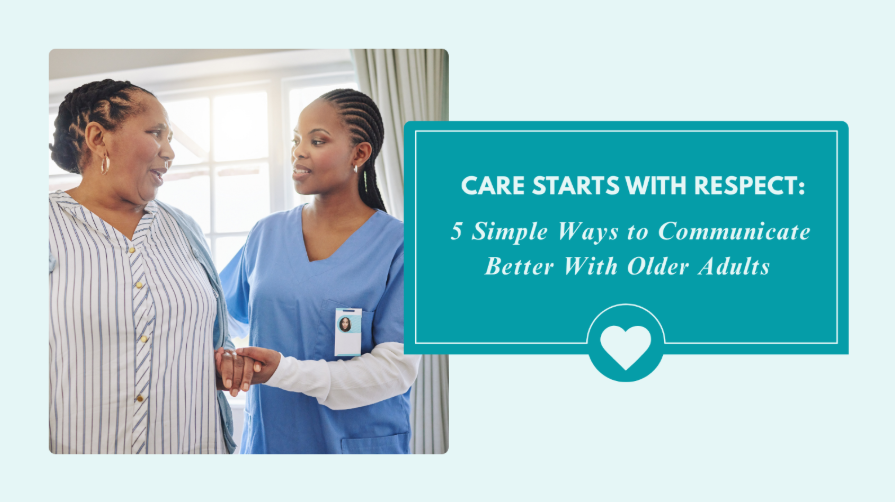
When we think about caring for older adults, we often focus on practical support, helping with meals, appointments, medications, or transportation.
But one of the most important parts of caregiving is often overlooked: communication.
The way we speak to older adults can affect how respected, independent, and included they feel. Small changes in how we communicate can make a big difference in preserving dignity and strengthening relationships.
Here are five simple ways to communicate with older adults in a more respectful and supportive way.
Speak With Them, Not About Them
It’s common for family members or caregivers to answer questions on behalf of an older adult, especially during appointments or care discussions.
Whenever possible, include them directly in the conversation.
Instead of asking, “Can she make it to the appointment?” try asking, “Would next Tuesday work for you?”
Even small changes help ensure their voice remains at the center of decisions about their own life.
Ask Before Helping
As caregivers, our instinct is often to jump in and help. But automatically taking over can sometimes make someone feel less capable.
Before stepping in, ask: “Would you like a hand with that?”
Offering a choice helps older adults maintain a sense of control and independence, even when support is needed.
Be Mindful of Your Language
Terms like “sweetie,” “honey,” or “good job” are often meant to be kind, but not every older adult appreciates being spoken to that way.
A simple rule of thumb: speak to older adults the same way you would speak to any other adult.
Respectful language helps build trust and reinforces dignity.
Listen More Than You Talk
Sometimes the most meaningful thing we can do is simply listen.
Older adults have a lifetime of experiences, stories, and perspectives. Taking a few extra minutes to hear what they have to say can strengthen relationships and help caregivers better understand their needs and preferences.
Good care starts with understanding the person, not just completing tasks.
Respect Their Choices
Whether it’s choosing what to wear, what to eat, or how they’d like to spend their day, small decisions matter.
Whenever possible, involve older adults in decisions that affect their daily lives.
Support should empower people, not replace their ability to make choices.
The Bottom Line
Respectful communication isn’t about finding the perfect words. It’s about making older adults feel heard, valued, and included.
At Omatochi, we believe great care goes beyond helping with daily tasks. It means treating every person with dignity, honoring their choices, and recognizing the life experiences they bring to the table.
Because care starts with respect.